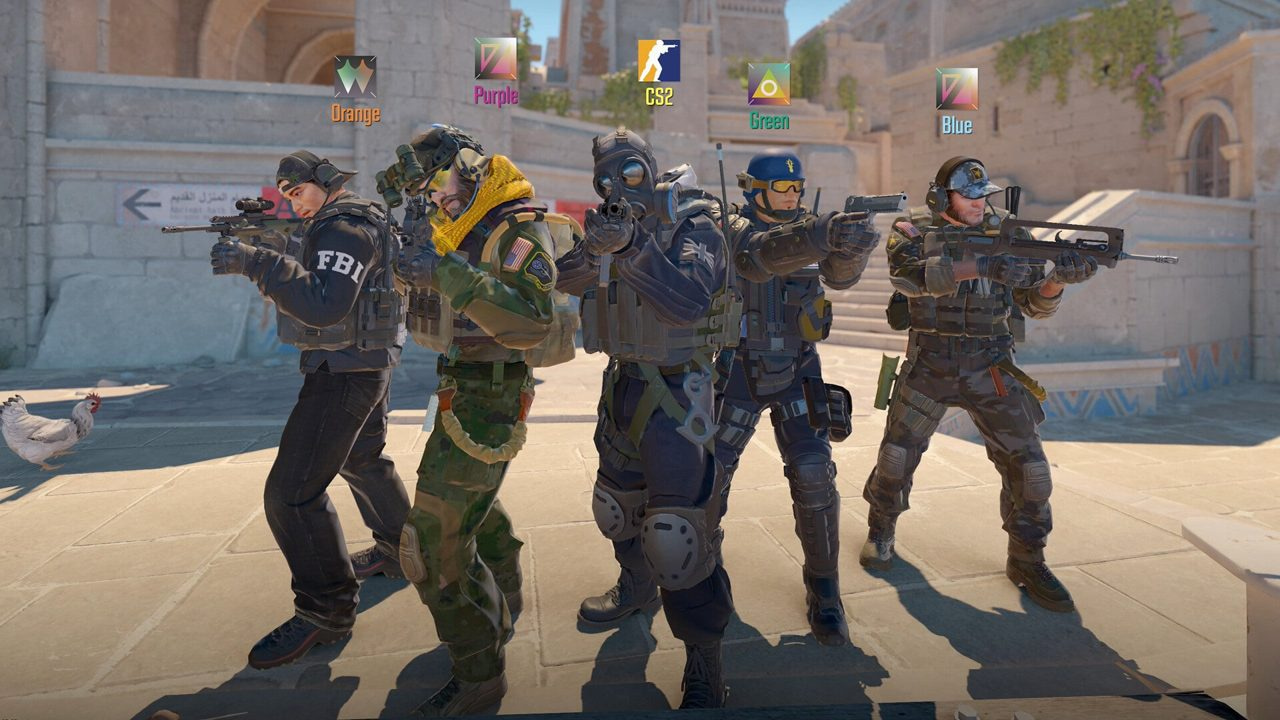
Game one in ranked feels different from deathmatch. Buy time ends in eight seconds, someone asks for a mid flash you do not have, and you die holding an angle you thought was safe. That is normal — the gap is usually structure, not raw aim.
This guide is the checklist I wish every new player had before clicking Competitive or Premier: account readiness, a short warmup that actually transfers, comms that help without a 200-hour vocabulary, and a review habit so game one becomes data instead of frustration. If CS2 fundamentals are still fuzzy, start with our beginner's guide first.
Quick answer: before your first ranked game
- Confirm Prime Status, stable ping under 80 ms to your region, and at least one map you can call five spots on.
- Warm up 15–20 minutes: static aim → deathmatch with counter-strafe focus → one smoke refresh on your main map.
- Use push-to-talk; call location + number ("one B apps") and economy before buy time ends.
- Expect placement volatility — hidden MMR moves faster in early games; read our ranking system guide.
- Review three deaths after the match; stop queueing after three losses in a row when tired.
Key takeaways
- Placement games weight round wins and individual performance — one ace does not fix five silent losses.
- Simple comms beat perfect silence; location and number is enough on day one.
- One map at 80% beats seven maps at surface level — ban unknown maps in Premier veto.
- Economy calls prevent the force-buy spiral that ruins calibration lobbies.
- Post-game review of three deaths builds the habit that actually climbs rank later.
Table of contents
- Key takeaways
- Account and placement readiness
- What placement and calibration actually do
- Pre-queue warmup that transfers to ranked
- Communication basics for game one
- What to expect in your first match
- Economy calls every new player should make
- Settings check before you queue
- Post-game review in 10 minutes
- Competitive vs Premier for your first queue
- Frequently asked questions
- Conclusion
Account and placement readiness
Ranked is not a tutorial. Counter-Strike 2 expects you to understand buy rules, bomb timing, and basic map geometry before you queue. Prime Status filters a chunk of smurf and bot traffic — treat it as the default for serious play, not an optional upgrade.
Competitive matchmaking assigns or adjusts a skill group after calibration games. Premier shows a visible CS Rating and adds map veto — higher stakes, same underlying MMR logic. For mode differences and veto flow, read our Premier mode guide after you finish your first Competitive block.
| Check | Why it matters | If you skip it |
|---|---|---|
| Prime Status active | Better match quality in low ranks | Longer queues, rougher lobbies |
| Stable ping (<80 ms ideal) | Peek timing and nade fuses feel consistent | You blame aim when it is latency |
| One main map chosen | Callouts and smokes work under pressure | Random map anxiety every queue |
| Mic or reliable pings | Trades and rotates happen | You play solo CS in a team mode |
| 30+ hours of fundamentals | Economy and round structure are automatic | Every loss feels like bad luck |
What placement and calibration actually do
Valve does not publish exact placement formulas — and they change between seasons. What stays consistent: early ranked games move your hidden rating faster than game 200. Winning rounds matters more than top-fragging while your team plants nowhere.
Premier displays CS Rating after calibration; Competitive shows a skill group badge. Both track similar skill — players obsess over the number, but the number is a lagging indicator. Understanding how wins, losses, and performance combine helps you stay calm when the badge looks wrong after game three. Full breakdown in our ranking system explainer.
Pre-queue warmup that transfers to ranked
Deathmatch for an hour with no focus warms your hands, not your ranked brain. Fifteen focused minutes beats forty minutes of scroll-wheel AWP lobbies.
- 5 min static aim or trainer — head-level flicks only, no spray transfers yet.
- 10 min deathmatch — counter-strafe before every shot; treat every duel like a held angle.
- 2 min utility — throw your main-map default smoke and one flash lineup cold.
- Queue when alert, not after midnight when reaction time drops.
Skip ranked if you are tilted from a previous session. Calibration games punish fatigue harder than DM ever will — three straight losses on a tired brain can set a lower starting point than your actual skill.
Communication basics for game one
You do not need a casters vocabulary. You need three information types your team can act on: where enemies are, how many, and what you want next round economically.
| Situation | Say this | Avoid this |
|---|---|---|
| Spotted one enemy | "One B apps, rifle" | "He's there" / silence |
| Multiple contacts | "Two mid, one cat" | Over-talking while alive in a clutch |
| Bomb spotted | "Bomb A, two site" | Chasing the planter alone |
| Economy | "Save — $2,400 each" | Force-buying solo after two losses |
| Rotate request | "Rotate B, bomb spotted A" | Staying silent while team stacks wrong site |
Push-to-talk keeps comms clean. Bind it if you have not — open mics pick up keyboard clatter and Discord echo that teammates mute you for. Location plus number is the entire ranked vocabulary until you are Gold+.
What to expect in your first match
Round one is pistol — armor plus utility or a coordinated rush beats five Glocks wandering. Half time swaps sides at round 12; you need T-side and CT-side plans on your map, not just one comfortable side.
Buy phases are short. If you are still in the buy menu when the round starts, you are essentially ecoing with full money. Pre-buy defaults during freeze time: rifle maps favor AK/M4 plus armor and one smoke minimum on full buys.
Teammates will force-buy, push alone, and miss calls — that happens at every rank. Your job in placement is consistency: trade when you can, save when the round is dead, and plant or defuse when the numbers favor it.
- First contact often decides the round — do not wide-swing without a flash or a trade partner.
- Time pressure is real on T side; CTs win free rounds when Ts hunt kills with 10 seconds left.
- Overtime exists at 12–12 in Competitive — stamina and comms clarity matter in game 25+.
Economy calls every new player should make
Most first-ranked losses are economic, not mechanical. Four players on rifles while you force an AK round 3 sets up round 4–6 disasters. Call saves early — buy time ends fast and silent force-buys lose more rounds than bad aim.
Full buy threshold is roughly $4,700+ for rifle, armor, and utility. After two consecutive losses, default to save unless four teammates agree on a coordinated force. For round-by-round thresholds and pistol rules, read our economy guide.
| Round context | Smart call | Why |
|---|---|---|
| Lost pistol | Eco or team force — agree out loud | Solo rifle vs five SMGs loses |
| $1,400 after two losses | Full save to rifle round | One gun does not retake a site |
| Won eco, ~$3,200 each | Half-buy or force with team | First coordinated rifle opportunity |
| 13–11, match point | Buy together — no hero AK | Mixed buys throw closed games |
Settings check before you queue
Changing sensitivity mid-calibration resets muscle memory when you need consistency most. Lock crosshair, sensitivity, and audio for at least two weeks of ranked.
Headphones, not speakers — footstep direction wins pistol rounds. Disable motion blur, cap or uncap FPS based on what keeps frame times stable on your PC, and confirm enemy contrast is readable on your main map's palette.
Post-game review in 10 minutes
After your first match, write down three deaths — not highlights. For each: Was crosshair at head height? Did you peek alone? Did you know the economy?
- Pick three deaths — one early half, one mid, one late.
- Label each: aim, position, info, or economy mistake.
- One fix per death — "hold with teammate at B apps" beats "aim better."
- Queue again only if focused; stop after three losses when tired.
Demo review comes later — for game one, mental notes are enough. The habit matters more than HLTV-level analysis on day one. Players who review three deaths per match climb faster than players who instant-requeue after a 6–16.
Competitive vs Premier for your first queue
Start Competitive if you know one map deeply — you skip veto pressure and learn round structure without banning maps you never practiced. Move to Premier once you can contribute on three Active Duty maps and understand veto logic.
Premier's map ban phase is where unprepared players lose before pistol — if you only know Dust2, Premier will expose that immediately. When you are ready, our Premier mode guide covers ban order and pick strategy.
Frequently asked questions
How many placement matches does CS2 require?
Valve adjusts this by mode and season — check the in-game Competitive or Premier tab for current rules. Expect roughly 10 games before a skill group or CS Rating stabilizes, with faster movement in the first few matches.
Should I queue Competitive or Premier first?
Competitive first if you main one map. Premier adds veto — great once you know three maps, punishing if you do not. Read our Premier mode guide before switching.
Do I need Prime for my first ranked game?
For serious ranked, yes. Prime improves match quality in most regions. Complete Steam and Prime setup before grinding placement.
How long should I warm up?
15–20 focused minutes: aim drill, counter-strafe deathmatch, one utility rep. Longer warmups help if you have time, but queue when sharp — not exhausted.
What if teammates do not use comms?
Call your own info anyway — location and number. Use pings for bomb and enemy spots. You cannot force others to talk, but silent teams still benefit from one clear voice.
Is losing placement games normal?
Yes. Calibration finds your level — Ls against higher-rated opponents still move MMR less than stomping bots in DM. Focus on round wins and reviewable deaths, not the badge after game two.
When should I stop queueing for the day?
After three consecutive losses when tired, or when you notice yourself force-buying solo and blaming teammates. Ranked tomorrow with a clear head beats five more tilted games tonight.
Conclusion
Your first ranked match is a baseline, not a verdict. Confirm Prime and ping, run a short warmup, call location and economy, and review three deaths when it ends. That process beats queueing cold from deathmatch every time.
Next reads: ranking system for how MMR moves, economy guide for buy calls, and competitive settings before game two. When one map feels comfortable, step into Premier mode with veto prep ready.